Workiva said on June 12 that it launched an AI-powered disclosure agent to help organizations identify sustainability reporting gaps earlier, a more important shift than another generic writing assistant.
Key Takeaways
- On June 12, ESG Post and ESG News reported that Workiva launched an AI-powered disclosure agent focused on automating sustainability disclosure analysis and identifying reporting gaps earlier in the process.
- Workiva’s own support documentation says its AI tools can generate compliance-ready narrative responses and analyze disclosures against ESRS or IFRS Sustainability Disclosure Standards requirements.
- Workiva’s February 2026 executive benchmark survey found 65% of organizations use AI in select components of quarterly or annual disclosures and 46% use it extensively across the reporting process.
- The U.S. SEC proposed rescinding its climate-related disclosure rules on May 29, 2026, increasing the importance of multinational reporting architectures that do not rely on one regulator’s direction alone.
Most companies are using AI for the wrong part of sustainability reporting
The most overhyped use of AI in ESG is narrative drafting. It is visible, easy to demo, and easy to sell. It is also not where the hardest reporting work lives. The real challenge in sustainability disclosure is not writing smoother paragraphs. It is deciding what must be disclosed, tracing each claim to evidence, reconciling metrics across systems, and catching omissions before they become compliance or assurance failures.
That is why the more interesting June 2026 development is not that another software provider added AI to reporting. It is that the reported product emphasis is shifting toward analysis and gap detection. Coverage on June 12 from ESG Post and ESG News said Workiva launched an AI-powered disclosure agent designed to automate sustainability disclosure analysis and help companies close reporting gaps earlier.
That may sound incremental. It is not. The strategic significance is that AI is moving from a content layer to a control layer. That is exactly where sustainability reporting needs help as companies deal with overlapping ESRS and ISSB requirements, assurance expectations, and shifting U.S. policy signals.
This article’s thesis is straightforward: in sustainability reporting, generative AI creates the most value not when it writes, but when it tests. The organizations that understand that distinction will get faster and more reliable. The ones that use AI primarily as a drafting shortcut will create new risk.
This complements our broader analysis of what robust ESRS data governance should look like and how AI changes sustainability assurance readiness.
Why gap detection matters more than auto-generated prose
Sustainability reports fail in predictable ways. Required disclosures are omitted. Scope boundaries are inconsistent. Narrative statements outrun the underlying data. Business units use different assumptions. Controls are weaker than in financial reporting. None of those failures are solved by a better paragraph generator.
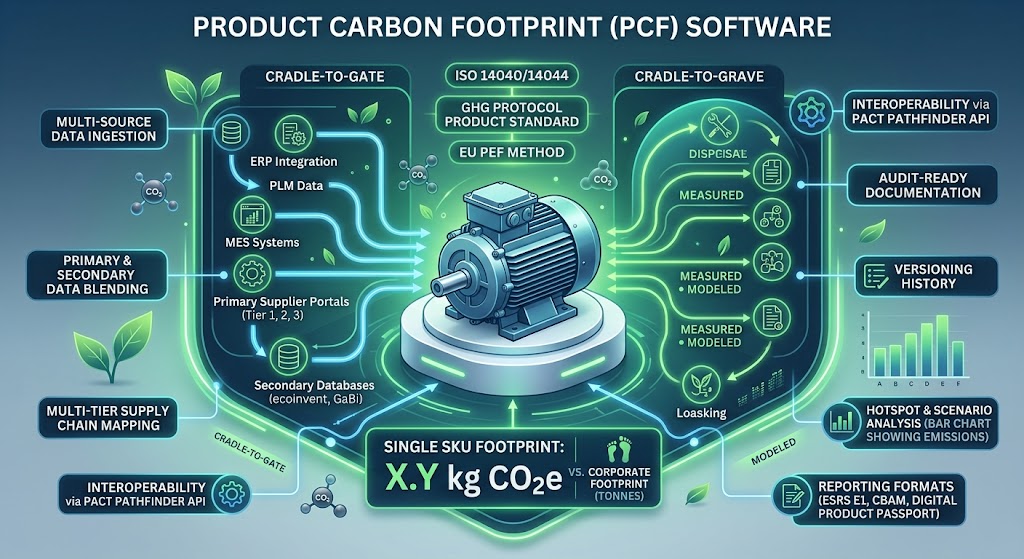
They are solved by tools that can compare draft content against a defined standard, identify where evidence is missing, and flag mismatches before review cycles get expensive. Workiva’s own support materials, updated in May 2026, make this direction clear. The company says Workiva AI can help summarize requirements, generate compliance-ready narrative responses, and, within its Disclosure Creator workflow, provide a compliance scorecard, action items, and draft disclosure responses based on ESRS or IFRS Sustainability Disclosure Standards requirements.
That matters because the core reporting challenge in 2026 is combinatorial. A multinational may need to serve EU CSRD and ESRS requirements, investor-grade IFRS Sustainability Disclosure Standards use cases, voluntary questionnaires, internal target tracking, and sector-specific expectations from lenders or customers. The burden is less about one report than about one disclosure architecture feeding many outputs.
AI can genuinely help here, but only if it is attached to structured controls. A model that checks whether a draft addresses the relevant requirement, identifies missing elements, and routes action items to the right owner is useful. A model that writes polished sustainability language over weak data is dangerous. The first reduces friction. The second industrializes greenwashing risk.
June 2026 policy uncertainty makes AI controls more valuable, not less
Some U.S. companies may look at the current regulatory environment and conclude that sustainability disclosure pressure is easing. That would be a mistake. Yes, the U.S. Securities and Exchange Commission proposed rescinding its climate-related disclosure rules on May 29, 2026. That is a real and material development. But it does not remove the reporting burden for global firms. It fragments it.
In a fragmented system, internal control becomes more important. Companies can no longer optimize around a single anticipated U.S. rule set. They need reporting processes that can map the same underlying data and governance evidence across multiple standards and jurisdictions. That is one reason tools tied to ESRS and IFRS logic are gaining traction.
The IFRS Foundation’s June calendar also shows the ISSB remains an active focal point for capital-markets reporting, with an ISSB update scheduled for the Capital Markets Advisory Committee and Global Preparers Forum meetings on June 18 and 19, 2026. The implication is not that one framework will simply replace another. It is that global reporting will continue to operate through overlapping centers of gravity.
Under those conditions, AI should be treated as a translation and controls engine, not as a shortcut around governance. The stronger reporting stack in 2026 is the one that can answer three questions at any moment: what is required, where the evidence sits, and what is still missing. Policy volatility makes those capabilities more valuable because companies have to pivot outputs without rebuilding data foundations from scratch.
The reporting market is shifting from assistance to auditability
One useful signal came earlier this year from Workiva’s executive benchmark survey. The company reported in February that 65% of respondents use AI in select components of quarterly or annual disclosures, while 46% use it extensively across the reporting process. It also said 76% reported that internal audit teams test their AI models. Those figures suggest the market has already moved past experimentation. The debate is now about scale with guardrails.
That point deserves emphasis. The next competitive divide in AI reporting software will not be who can generate the best sentence. It will be who can maintain traceability, permissions, version control, review workflows, and audit-ready evidence while still accelerating output. In other words, the product battle is moving from intelligence alone to trustworthy intelligence.
This is especially important in sustainability because disclosure maturity still lags financial reporting in many organizations. Source systems are fragmented. Ownership is diffuse. Many metrics depend on estimates or supplier inputs. Assurance expectations are rising faster than process maturity. That makes uncontrolled AI especially risky.
The better model is to embed AI inside governed workflows. Let it propose. Let it compare. Let it score. But require that every material output be reviewable against standards and evidence. Sustainability teams should insist on that architecture from vendors and internal IT alike.
For companies building that stack now, a useful adjacent question is how to connect disclosure tools with broader enterprise systems. That is where enterprise sustainability data architecture and CSRD assurance controls become inseparable from AI adoption.
What leaders should do next: redesign workflow before buying more AI
There is a temptation to treat every new AI reporting feature as a software procurement decision. In practice, the bigger gains come from workflow redesign. Before adding another tool, sustainability leaders should map where reporting breaks today. Is the biggest problem requirement interpretation, data collection, review bottlenecks, evidence linkage, or executive sign-off? AI can help all of those areas differently, but only if the underlying process is visible.
A disciplined approach starts with standards mapping. Identify the disclosures that matter most under ESRS, ISSB, customer requests, and internal commitments. Then define evidence sources, control owners, and review thresholds. Only after that should AI be layered in to detect gaps, summarize obligations, suggest draft language, and route tasks. Otherwise the system merely accelerates a messy process.
Leaders should also distinguish between low-risk and high-risk AI use cases. Summarizing a standard or suggesting non-material wording changes is not the same as generating emissions narrative, climate-risk statements, or value-chain claims. The materiality of the disclosure should determine the control environment around the model output.
Finally, procurement teams should ask vendors harder questions. What standards are supported, and how often are they updated? Can the tool show which requirement a suggestion is tied to? Can users inspect source text and linked evidence? How are prompts, outputs, permissions, and review actions logged? If those answers are weak, the product is probably a writing aid, not a reporting control system.
What This Means for Sustainability Leaders
The June 2026 lesson is that AI is becoming useful in sustainability reporting precisely where the work is least glamorous: controls, comparison, and closure of gaps before filing deadlines and assurance reviews. That is good news for serious teams, because those are the highest-value pain points. But it also means leaders need a stricter operating model. Do not evaluate AI tools on how quickly they draft text. Evaluate them on whether they reduce omission risk, preserve traceability, support ESRS and ISSB alignment, and strengthen governance in a period of regulatory fragmentation. The organizations that adopt AI as a control layer will produce disclosures that are faster and more defensible. The rest may simply produce errors at machine speed.
Frequently Asked Questions
How is AI being used in sustainability reporting in 2026?
In 2026, AI is increasingly being used to analyze disclosure requirements, identify missing content, summarize standards, and help draft report sections. The most valuable uses are shifting toward control and gap detection rather than pure text generation.
Can AI help with ESRS and ISSB compliance?
Yes, but only if it is connected to structured workflows and the relevant standards. Tools such as Workiva’s documented sustainability reporting features are designed to analyze disclosures against ESRS or IFRS Sustainability Disclosure Standards and surface gaps or action items.
Does the SEC climate rule change reduce the need for AI reporting tools?
No. The SEC’s May 29, 2026 proposal to rescind its climate-disclosure rules may reduce one U.S. compliance path, but it increases fragmentation. Multinationals still need systems that can manage disclosures across EU, IFRS, investor, and customer expectations.
Want sharper analysis on AI, ESG reporting, CSRD, ISSB, and the sustainability of digital infrastructure? Subscribe to SustainabilityAGI for editorial coverage built for practitioners, not product demos.