For many companies, the journey to net zero starts with ambition but quickly runs into complexity. Emissions data is fragmented across suppliers, facilities, logistics networks, and finance systems. Regulations are tightening, stakeholders want credible transition plans, and leadership teams need to balance decarbonization with cost, resilience, and growth. This is where AI tools for corporate net-zero roadmaps are becoming a strategic advantage.
Artificial intelligence can help organizations move beyond static carbon inventories and annual reporting cycles. By automating data collection, identifying emissions hotspots, modeling reduction pathways, and improving scenario planning, AI enables a more practical and actionable approach to climate strategy. The result is not just better reporting, but better decisions.
Why AI matters in building a credible net-zero roadmap
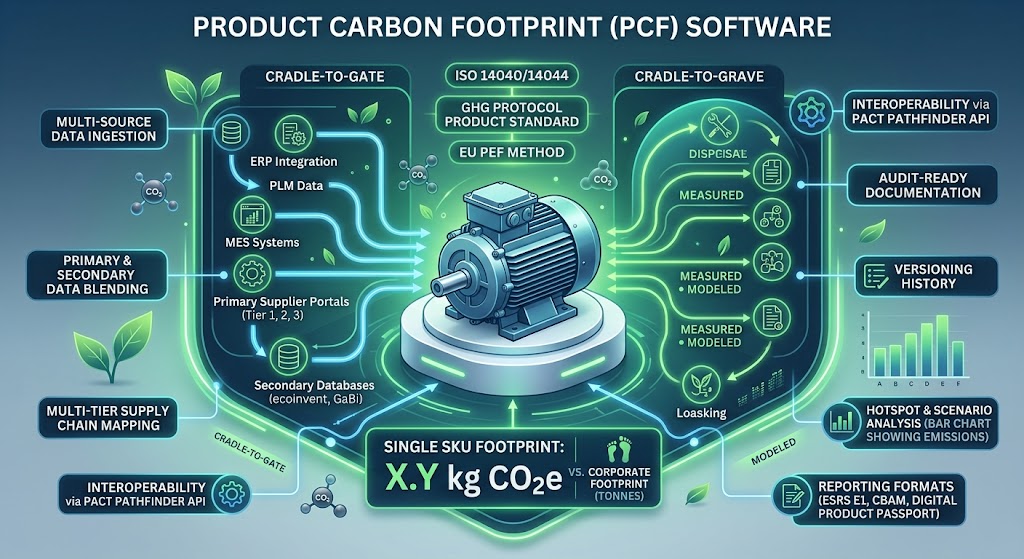
A corporate net-zero roadmap is only as strong as the data and assumptions behind it. Many sustainability teams still rely on manual processes to gather Scope 1, 2, and especially Scope 3 emissions data. That creates delays, inconsistencies, and blind spots. AI tools can reduce this burden by connecting with ERP systems, utility data, procurement platforms, travel systems, and supplier databases to generate more complete emissions baselines.
Machine learning is particularly valuable when direct emissions data is missing. It can estimate likely emissions factors based on industry, geography, material type, transport mode, or spending patterns. While estimates should never replace primary data in the long run, they give companies a more accurate starting point than generic averages alone.
AI also improves materiality analysis. Instead of treating every source equally, algorithms can rank emissions sources by impact, cost of abatement, operational feasibility, and dependency risk. For example, a manufacturer may discover that supplier energy use and purchased materials drive a larger share of emissions than its own facilities. That insight can fundamentally reshape the roadmap, shifting attention toward procurement and supplier engagement.
- Faster carbon footprinting across business units and geographies
- Improved Scope 3 estimation and supplier emissions mapping
- Better hotspot detection for energy, transport, and materials
- More dynamic target-setting and progress tracking
Where AI tools deliver the most value
The strongest use cases for AI in net-zero planning sit at the intersection of data quality, operational complexity, and decision speed. In practice, companies are using AI tools across four high-value areas.
First, emissions measurement and data management. AI can classify transactions, match activity data to emissions factors, detect anomalies, and standardize data across multiple business systems. This is especially useful for large enterprises with thousands of vendors and decentralized operations.
Second, decarbonization scenario modeling. AI tools can simulate the impact of interventions such as renewable electricity procurement, fleet electrification, low-carbon materials sourcing, HVAC upgrades, or logistics optimization. Rather than asking, “What are our emissions?” companies can ask, “Which mix of actions gets us closest to our 2030 target at the lowest cost?”
Third, supplier engagement. Since Scope 3 often accounts for the majority of a company’s footprint, AI can help segment suppliers by emissions intensity, readiness, and strategic importance. Some platforms even generate customized outreach, recommend data requests, and flag opportunities for joint abatement projects.
Fourth, climate risk and transition planning. Advanced models can combine emissions data with climate policy trends, carbon pricing scenarios, energy market shifts, and physical risk indicators. This supports a roadmap that is not only low carbon, but also financially resilient.
A real-world example can be seen in global consumer goods and manufacturing sectors, where companies increasingly use AI-enabled sustainability platforms to track supplier emissions and forecast reduction opportunities. In logistics, AI route optimization has already reduced fuel consumption and emissions while cutting delivery costs. In commercial real estate, smart building systems use AI to adjust lighting, heating, and cooling in real time, often delivering both emissions reductions and measurable energy savings.
How to choose the right AI tools for net-zero strategy
Not every AI solution is ready for enterprise-grade climate planning. Companies should evaluate tools based on transparency, interoperability, and governance, not just automation claims. A useful AI platform should show how emissions estimates are generated, what data sources are used, and where uncertainty remains. Black-box outputs may look impressive, but they can undermine auditability and executive trust.
Integration is equally important. The best tools fit into existing workflows by connecting with finance, procurement, operations, and ESG reporting systems. If sustainability data remains isolated, AI will have limited strategic impact. Corporate net-zero roadmaps work best when carbon data becomes part of mainstream business planning.
Organizations should also assess whether a tool supports action, not just measurement. Dashboards alone will not reduce emissions. Look for features such as marginal abatement cost analysis, capital planning support, target tracking, and supplier collaboration capabilities.
- Prioritize tools with transparent methodologies and clear audit trails
- Check compatibility with ERP, procurement, and reporting systems
- Ensure the platform supports Scope 3 and supplier engagement
- Look for scenario planning, forecasting, and abatement analytics
- Establish human oversight for model validation and decision-making
The future of AI-driven net-zero roadmaps
Over the next few years, AI tools for corporate net-zero roadmaps will likely become more predictive, more embedded, and more sector-specific. We can expect stronger digital twins for factories and supply chains, better integration of satellite and IoT data, and more granular emissions forecasting at product, site, and supplier level. As regulations such as ISSB-aligned disclosures, CSRD requirements, and supply chain due diligence rules expand, AI will also play a growing role in compliance readiness.
But the bigger shift is strategic. Net-zero planning is moving from a sustainability side function to a core business capability. AI can help CFOs evaluate the financial implications of transition pathways, help procurement teams reduce embodied carbon, and help operations leaders optimize energy use continuously rather than periodically. In other words, AI is making decarbonization more operational.
That said, success still depends on fundamentals: strong governance, reliable data, executive sponsorship, and realistic implementation plans. AI is an accelerator, not a substitute for climate leadership.
Companies that start now have an opportunity to build roadmaps that are more credible, adaptive, and investment-ready. If your organization is refining its climate strategy, this is the moment to evaluate how AI can strengthen your emissions data, sharpen your decisions, and speed up measurable progress toward net zero.